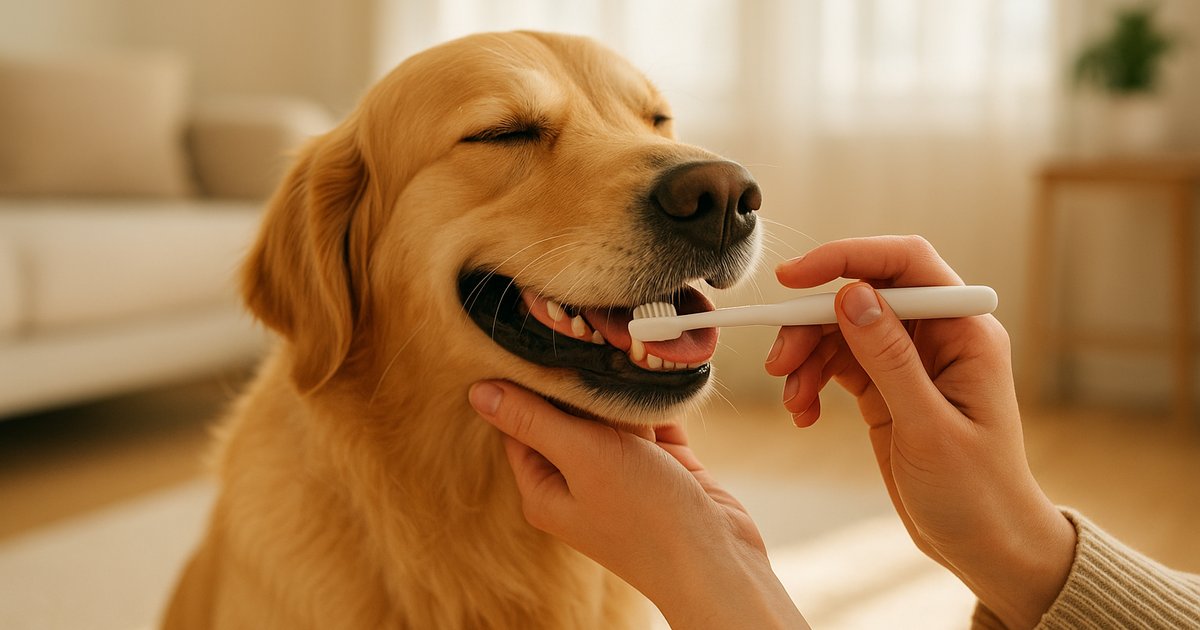
How to Clean Your Dog's Teeth at Home: A Complete Guide
Why Dog Dental Care Matters
Dental care is one of those things that’s easy to overlook — your dog can’t tell you when something in their mouth feels uncomfortable. But a quick, regular cleaning routine does more than keep breath fresh. Food debris and bacteria build up on the teeth throughout the day, and over time that buildup can harden into tartar, especially along the gumline. Gentle, routine cleaning helps remove plaque before it has a chance to settle in.
None of this means you need to become a dental expert. The goal of at-home care is simple: keep your dog’s teeth and gums in the best everyday condition you can, between professional check-ups. It’s also a chance to spend a few calm minutes with your dog and to learn what’s normal in their mouth — which makes it much easier to notice when something changes.
At-home care complements veterinary care; it doesn’t replace it. Professional dental cleanings remain the standard for removing established tartar, and your vet is the right person to evaluate anything unusual you spot at home.
How Often Should You Clean Your Dog’s Teeth?
There’s no single answer that fits every dog, and your veterinarian’s advice should always come first. As a general starting point, many pet owners aim to brush a few times a week, and some manage every day. The most important thing is consistency — a routine you can actually stick to will do more for your dog than a perfect routine you only manage once a month.
Start with what feels realistic for you and your dog. Even a couple of thorough sessions a week, paired with regular checks of your dog’s teeth and gums, puts you well ahead of doing nothing at all. And if you ever notice something that worries you — persistent bad breath, discolored teeth, or anything that looks off — that’s a good reason to check in with your vet rather than wait for the next scheduled cleaning.
How to Clean Your Dog’s Teeth Step by Step
Cleaning your dog’s teeth at home doesn’t require any special skill — just patience and a gradual approach. Here’s a step-by-step method that works for most dogs.
1. Choose the right time
Pick a moment when your dog is relaxed — after a walk or play session, when they’re calm rather than wound up. Avoid times when they’re eating, sleeping, or clearly wanting to be left alone. A quiet spot with no other pets or loud distractions helps keep everyone calm.
2. Get your dog comfortable with mouth handling
Before you ever bring out a toothbrush, let your dog get used to having their mouth touched. Start by gently stroking their muzzle and lifting their lips for a second or two, then reward them with praise and a small treat. Do this in short sessions over a few days. The goal is for your dog to associate having their mouth handled with something positive, not with being held down.
3. Introduce the toothbrush and toothpaste
Use a toothbrush designed for dogs — their mouths are shaped differently from ours, and dog brushes have softer bristles that are gentler on the gums. Pair it with toothpaste made specifically for dogs, which is formulated to be safe if swallowed. Many dogs like the flavor, which makes the whole process much easier.
4. Start slowly
On the first few attempts, you don’t need to clean every tooth. Let your dog sniff the brush, gently brush one or two teeth, and stop. Keep the session short and end on a good note with praise or a treat. Over several days, gradually work your way around the whole mouth. If your dog pulls away, slow down rather than pushing through — a short, calm session is always better than a stressful one.
5. Focus on the teeth and gumline
When your dog is comfortable, angle the bristles toward the gumline and use small, gentle circular motions. The gumline is where plaque tends to build up first, so it’s worth a little extra attention there. You don’t need to scrub hard — gentle and thorough beats forceful and rushed. Brushing the outside surfaces does most of the work; your dog’s tongue keeps the inner surfaces reasonably clean on its own.
6. Build a consistent routine
Routine is what turns this from a chore into a habit for both of you. Pick the same time of day, keep the same calm tone, and reward your dog afterwards. Most dogs learn to tolerate — and even enjoy — the ritual once it becomes predictable.
What If Your Dog Won’t Let You Brush Its Teeth?
You’re not alone if traditional brushing doesn’t go smoothly at first. Many dogs resist having a brush in their mouth, and some never fully warm to it. That doesn’t mean you’re out of options.
- Go slower with desensitization. Back up a step — spend more time on mouth handling and letting your dog sniff the brush before attempting any real brushing. Small, patient steps often win where enthusiasm fails.
- Try finger dental wipes. Finger wipes are soft textured pads you slip over your finger and gently rub across your dog’s teeth and gums. They’re easier to control, less intimidating than a brush, and many dogs tolerate them more readily — a great starting point or a useful option for dogs who simply won’t accept a brush.
- Use products designed for dogs. There are a range of dog-specific dental products, from oral care kits to gels and sprays, designed to make at-home cleaning more approachable. You can explore the dog dental care range to see what fits your dog’s temperament.
- Consider water additives as a supplement. Dental water additives are mixed into your dog’s drinking water and are designed to support fresh breath and oral hygiene as part of an overall routine. They’re easy to use, but they’re best thought of as a helpful extra rather than a substitute for mechanical cleaning.
The honest caveat: these alternatives are more accessible, but they’re not necessarily the same as brushing, and none of them replace professional veterinary dental care. If your dog strongly resists brushing and you’re concerned about their dental health, talk to your vet about what’s realistic for your dog.
Dog Toothpaste: What Should You Look For?
When you’re ready to brush, the toothpaste matters. The most important rule: use a toothpaste made for dogs, not your own human toothpaste. Human toothpaste contains ingredients that aren’t intended to be swallowed — and since dogs can’t rinse and spit, they end up swallowing whatever you use. Dog toothpaste is specifically formulated to be safe if swallowed.
Beyond that, the best toothpaste is one your dog will tolerate. Many dog toothpastes come in pet-friendly flavors, and a flavor your dog likes can make brushing dramatically easier. If you’re unsure where to start, a complete dog dental kit — toothpaste and brush together — is a simple way to get everything you need in one place.
Dog Dental Wipes vs. Toothbrushes
Both tools can play a role, and neither is “wrong” — it depends on your dog and your goals.
A toothbrush with toothpaste remains the gold standard for at-home cleaning: the bristles reach along the gumline, and the mechanical action does most of the work. Finger dental wipes, on the other hand, are softer, gentler, and easier to control. Many dogs who won’t hold still for a brush will tolerate a wipe, especially at first. Wipes are also handy for touch-ups, for puppies getting used to oral care, or for days when a full brushing session isn’t practical.
A sensible approach for many owners: start with finger dental wipes to build your dog’s comfort, then try transitioning to a brush as they get used to the routine — or use wipes as the everyday option and save brushing for when your dog is most cooperative. For a detailed, honest comparison, read our guide to dog dental wipes vs. toothbrushes.
Do Dog Dental Water Additives Work?
Dental water additives are liquid formulas you add to your dog’s water bowl. They’re designed to support oral hygiene — fresher breath and reduced plaque buildup — and they’re about as low-effort as dental care gets: add the recommended amount to the water and let your dog drink normally.
Used as directed, water additives can be a convenient part of an overall oral-care routine, particularly for supporting fresh breath. But it’s important to be realistic about what they are: a supplementary product, not a replacement for brushing or for professional dental care. Mechanical cleaning — whether with a brush or wipes — physically removes plaque, which is something a rinse can’t replicate. Think of a water additive as one tool in the kit, most effective when combined with regular cleaning and routine veterinary check-ups.
If you’re interested in trying one, look for a product intended for dogs, like a dog dental water additive that fits your dog’s needs.
When Should You See a Veterinarian?
At-home care is about everyday maintenance; some things belong in the vet’s office. Schedule a veterinary visit if you notice any of the following:
- Persistent bad breath that doesn’t improve with regular cleaning
- Visible discomfort — pawing at the mouth, reluctance to eat, or unusual drooling
- Bleeding from the gums or blood in the mouth
- Difficulty eating or chewing
- Visibly abnormal teeth or gums — discolored, chipped, loose, or swollen
- Swelling around the face or mouth
- Any other change in your dog’s mouth that seems out of the ordinary
This list isn’t a diagnosis — only a veterinarian can evaluate your dog’s specific situation. If you spot any of these signs, the right move is to get professional advice rather than assume it will resolve on its own. Regular veterinary dental check-ups are a good idea even when everything seems fine.
Building a Simple Dog Dental Care Routine
Here’s a realistic weekly rhythm many owners find manageable:
- Daily (1–2 minutes): a quick check of your dog’s teeth and gums while they’re relaxed — look for anything new or unusual.
- Most days (if your dog allows): a gentle brushing session with dog toothpaste.
- On busy days: swap brushing for finger wipes, or simply add the day’s water additive and keep it moving.
- Weekly: a slightly more thorough look — lift the lips, check the back teeth and gumline, and note anything that needs a vet’s attention.
- Yearly (or as your vet recommends): professional dental check-ups.
Keep it flexible. The routine that works is the one you’ll actually keep up — and consistency over months matters far more than perfection on any single day. If you’re just getting started, you can browse the full range in the PetZephoria shop. If you share your home with a cat too, the approach is a little different — see our guide to cat dental care at home for the cat-specific routine.
Frequently Asked Questions
How often should I clean my dog’s teeth?
For most dogs, brushing a few times a week is a reasonable goal, and daily is even better if your dog tolerates it. Whatever cadence you choose, consistency matters more than frequency — and your vet can give you guidance tailored to your dog.
Can I use human toothpaste on my dog?
No. Human toothpaste contains ingredients that aren’t safe for dogs to swallow, and dogs can’t rinse and spit. Always use a toothpaste formulated specifically for dogs.
What if my dog hates having its teeth brushed?
Go slower. Spend more time helping your dog feel comfortable with mouth handling, try finger wipes as a gentler start, and keep sessions short and positive. If your dog continues to resist and you’re concerned, your vet can help you figure out what’s realistic.
Are dog dental wipes useful?
Yes — finger wipes are a gentle, easy-to-control option, especially for dogs who won’t accept a brush, for puppies, or for touch-ups. They’re most effective as part of a broader routine rather than a one-off solution.
Can water additives replace brushing?
No. Water additives are a convenient supplement that can support fresh breath and oral hygiene, but mechanical cleaning like brushing or wipes physically removes plaque, and professional veterinary care handles what at-home care can’t. They work best alongside — not instead of — those.
Related Articles
- Cat Dental Care at Home: What Works and What Doesn't
What actually works for cat dental care at home — and what doesn't. Honest look at brushing, kits, sprays, water additives, and when to see a vet.