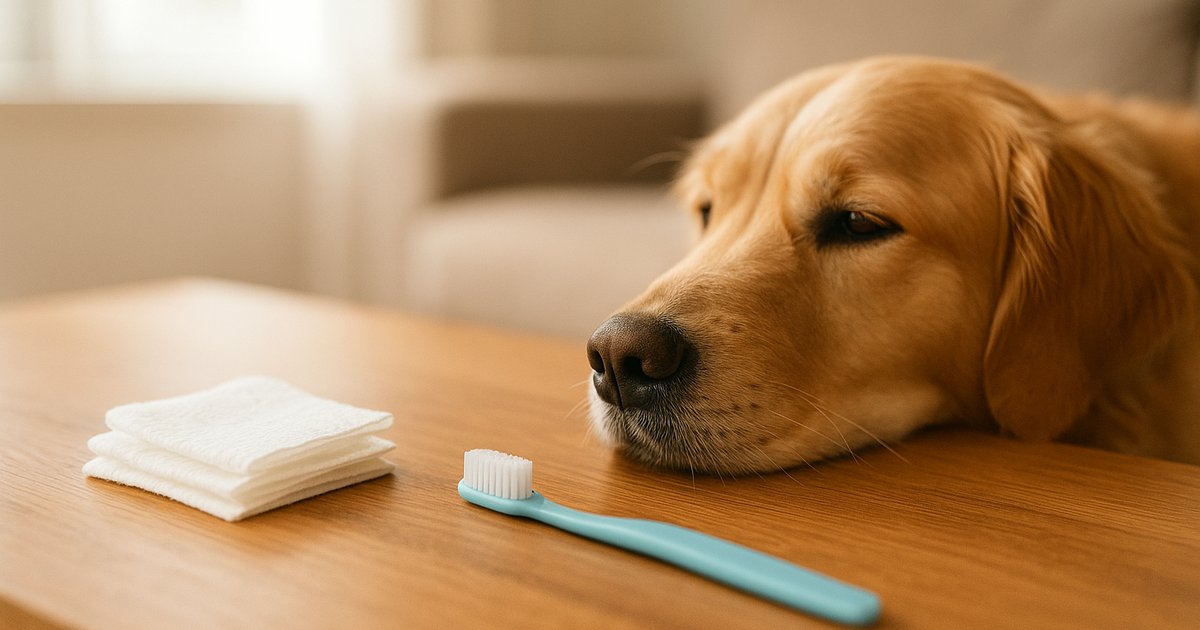
Dog Dental Wipes vs. Toothbrushes: Which Is Right for Your Dog?
Why the Toothbrush vs. Wipes Question Matters
If you’ve ever stood in the pet aisle (or scrolled a product page) trying to decide between a toothbrush and finger wipes for your dog, you’re not alone. Both are marketed as everyday dog dental care. Both are easy to use at home. And both promise the same prize: cleaner teeth, fresher breath, and a mouth you actually get to check on a regular basis.
But they are genuinely different tools, and the right answer depends on your dog. This guide compares them honestly — what each does well, where each falls short, and how to decide what fits your dog. We’ll also show how they can work together, because for many dogs the best routine uses more than one tool.
One thing up front: neither a toothbrush nor wipes replaces professional veterinary dental care. At-home tools are about everyday maintenance. Your vet handles the rest.
What a Dog Toothbrush Does Best
A toothbrush designed for dogs — soft bristles, a shape suited to a dog’s mouth — is the tool most vets point to for at-home dental care, and for good reason.
The bristles do the mechanical work. Brushing physically disturbs and removes plaque from the tooth surface and along the gumline, where buildup tends to start. Paired with dog toothpaste, a brush also spreads the toothpaste across every tooth — something a flat wipe can’t quite match.
Where it’s strongest:
- Thoroughness. Bristles reach along the gumline and between teeth more effectively than any flat pad.
- Delivers toothpaste. Brushing is the standard way to apply dog toothpaste across the whole mouth.
- The closest thing to a professional clean. When vets and owners talk about at-home care that comes closest to a professional cleaning, brushing is usually the baseline.
Where it falls short:
- Takes practice. Both you and your dog need to learn the routine together.
- Requires cooperation. Many dogs resist a brush in their mouth, at least at first.
- Not always practical. Some dogs simply never accept a brush, no matter how patient you are.
- More setup. You need a brush plus dog toothpaste, plus a calm, cooperative moment.
Brushing well doesn’t require technique gymnastics: angle the bristles toward the gumline, use small circular motions, and cover the outside surfaces of the teeth — the side your dog’s tongue can’t clean on its own. Short, calm sessions beat long, stressful ones, and a few good minutes a few times a week is a realistic, meaningful goal for most households.
If you’re ready to try brushing and want everything in one place, a complete dog oral care kit — toothbrush and toothpaste together — is a simple starting point.
What Dog Dental Wipes (Finger Wipes) Are — and When They Shine
Finger wipes are soft, textured pads that slip over your finger. You rub them across your dog’s teeth and gums, and the texture helps wipe away plaque and food debris. It’s a genuinely different approach: less like brushing, more like wiping.
Where they shine:
- Ease of use. Slip one on and go — no toothpaste, no brush, no setup.
- Gentle and non-intimidating. A finger in the mouth is often far less scary than a brush. Dogs who panic at a toothbrush will often tolerate a wipe.
- Great for starters. Puppies and dogs new to oral care can build positive associations quickly with wipes.
- Handy for touch-ups. After meals, on busy days, or between brushings, a quick wipe keeps momentum without a full routine.
- Travel-friendly. Easy to slip into a bag for trips or boarding weekends.
Where they fall short — and this matters:
- Less mechanical reach. A flat textured pad can’t get between teeth or as deep along the gumline as bristles can.
- No toothpaste by default. Most wipes are used on their own, so you’re not applying toothpaste across the teeth.
- Effectiveness depends on you. There’s no brush doing the work — the cleaning is only as good as the rubbing, so a deliberate, thorough pass matters.
- Generally less thorough than brushing. For pure plaque-removal power, bristles beat pads.
That last point is worth saying plainly: wipes are not “better” than brushing — they’re easier, gentler, and far more likely to actually happen with a reluctant dog. If you’re looking for a good option, you can explore finger dental wipes designed for pets and see if your dog takes to them.
Dog Dental Wipes vs. Toothbrushes: Head-to-Head
Here’s the honest comparison at a glance:
| Dog Toothbrush | Finger Wipes | |
|---|---|---|
| Cleaning effectiveness | Higher — bristles reach the gumline and between teeth | Moderate — removes surface debris, less reach |
| Ease of use | Requires technique, toothpaste, and patience | Very easy — slip on and wipe |
| Dog acceptance | Many dogs resist at first | Usually better tolerated, especially at first |
| Best paired with | Dog toothpaste | Works standalone, or alongside brushing |
| Ideal for | Dogs who tolerate brushing; thorough daily care | Puppies, reluctant dogs, travel, and touch-ups |
The honest summary: a toothbrush is the more powerful tool, and wipes are the more accessible one. Neither is “better” in the abstract — the best tool is the one your dog will actually let you use, consistently, week after week.
Which Should You Choose?
Rather than a blanket answer, here’s how the choice usually shakes out by situation:
- A puppy just starting out: Start with wipes. They’re quick, gentle, and build trust. Many puppies outgrow wipes as they get used to having their mouth handled — and some move to a brush within weeks.
- A dog who hates brushing: Don’t force it. Wipes give you a way to keep up dental care without the fight. You can pair them with the gradual desensitization approach in our complete guide to cleaning your dog’s teeth.
- A senior dog with sensitive gums: Wipes are gentler on tender mouths. If you have any concerns about your dog’s gums, check with your vet before starting any routine.
- A dog who happily tolerates brushing: Brushing with dog toothpaste is the most thorough everyday choice. Keep wipes on hand for touch-ups and busy days.
- Frequent travel or chaotic weeks: Wipes keep the routine alive when a full brush isn’t practical.
- Multi-dog households: Wipes are quick per dog, which helps when you’re doing several mouths in a row. Use a fresh wipe for each dog.
Still unsure? Try the two-week test: use wipes for a week and brush for a week (if your dog will tolerate it), and notice which one you actually reach for on a tired Tuesday. That’s usually the tool your dog will get the most consistent care from — and consistency is what moves the needle.
There’s no wrong starting point. Many owners begin with wipes, build their dog’s comfort, and add brushing later — or settle into wipes as their everyday option. What matters is that something happens regularly.
How to Use Finger Dental Wipes Correctly
If you go the wipes route, a few habits make a big difference:
- Use a wipe made for pets. Human and baby wipes can contain ingredients that aren’t meant for dogs to ingest.
- Let your dog sniff it first. A quick introduction avoids startling them.
- Slip the wipe over your index finger and make sure it’s snug.
- Gently lift the lip and rub the textured side along the teeth and gumline in small circles.
- Cover the outside surfaces of the back teeth — that’s where plaque builds most. Your dog’s tongue does a decent job on the inner surfaces.
- Keep it short, calm, and positive. Praise and reward afterwards. A minute of gentle wiping beats a stressful ten-minute ordeal.
Follow the product’s instructions — some wipes are single-use, and some are designed for a certain number of wipes per side.
Combining Wipes and a Toothbrush in One Routine
Here’s a secret that makes this whole debate easier: you don’t have to pick one. Many owners get the best of both by using them together.
- Brush a few times a week with dog toothpaste when your dog tolerates it — that’s where the deepest cleaning happens.
- Use wipes on the other days, after meals, or whenever a full brush isn’t practical.
- Consider a water additive daily for fresh-breath support between cleanings.
If a plan helps, here’s a sample week: brush with toothpaste on Monday, Wednesday, and Saturday; use wipes Tuesday, Thursday, and Friday; add the water additive every day; and do a quick visual check of teeth and gums on Sunday. Adjust to your dog — the shape matters less than showing up.
Consistency beats any single tool. A routine you’ll actually keep — even an imperfect one — beats a perfect routine you won’t. If you’re building a routine from scratch, our guide to cleaning your dog’s teeth at home walks through the full approach step by step.
Other Dental Tools Worth Knowing About
Two more tools round out the picture, and they fit different gaps:
- Dental water additives. Liquid you add to your dog’s water bowl to support fresh breath and oral hygiene. They’re the lowest-effort option there is, but they’re a supplement — not a replacement for mechanical cleaning. You can read more in our article on how to clean your dog’s teeth at home, or explore a dog dental water additive if you want to try one.
- Dental gels. Gel formulas you apply along the gumline can support a cleaning routine, and some are formulated for specific life stages — like a dental gel for puppies. Gels support, but they don’t scrub.
None of these replace brushing, wipes, or professional care — they add convenience on top of a routine that actually removes plaque. If you also have a cat, note that the tools and approach differ from a dog’s — see our guide to cat dental care at home for the cat side of things.
When to See a Veterinarian
At-home tools handle everyday maintenance, but some signs belong in the vet’s office. Book a visit if you notice persistent bad breath that doesn’t improve, bleeding gums, visible discomfort when eating, loose or discolored teeth, or swelling around the mouth. This list isn’t a diagnosis — only a vet can evaluate your dog — but if something looks off, it’s worth a professional look. The complete guide has a fuller breakdown of when to call your vet.
Frequently Asked Questions
Are finger wipes as good as brushing?
Generally, no — a toothbrush reaches the gumline and between teeth more effectively, and it delivers toothpaste across the whole mouth. But wipes are far better than doing nothing, they’re gentler, and many dogs accept them when they won’t accept a brush. They work best as part of a consistent routine rather than as a one-for-one replacement.
How often should I use dog dental wipes?
Daily is fine if your dog tolerates it, and even a few times a week makes a meaningful difference. Consistency matters more than frequency — whatever cadence you can sustain is the right cadence.
Can I use baby wipes or human wipes on my dog?
No. Human and baby wipes can contain ingredients that aren’t intended for dogs to swallow. Always use wipes made specifically for pets.
Do dental wipes replace a professional dental cleaning?
No. Wipes and brushing are everyday maintenance; professional veterinary dental care handles tartar and issues that at-home tools can’t. Think of them as complementary, not interchangeable.
Can I use wipes together with toothpaste?
Most wipes are designed to be used on their own — follow the product’s instructions. If you want toothpaste benefits, brushing (or the product’s own guidance) is the standard way to apply it.
Related Articles
- Cat Dental Care at Home: What Works and What Doesn't
What actually works for cat dental care at home — and what doesn't. Honest look at brushing, kits, sprays, water additives, and when to see a vet.
- How to Clean Your Dog's Teeth at Home: A Complete Guide
Learn how to clean your dog's teeth at home, from brushing and toothpaste to dental wipes and water additives, plus when to see a veterinarian.