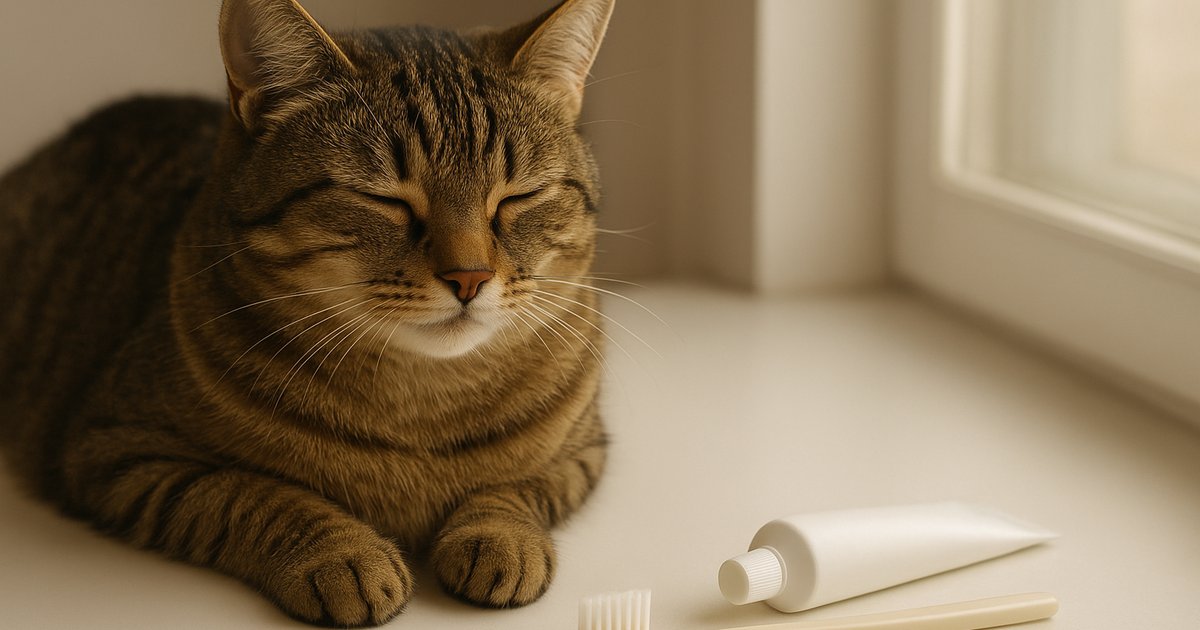
How to Brush a Cat's Teeth
Why Brushing Your Cat’s Teeth Is Worth the Effort
Brushing is generally considered the most effective at-home method for a cat’s dental care — and the reason is straightforward: the bristles physically remove plaque along the gumline, a mechanical action that other products don’t fully replace. That’s what earns it the label of “gold standard.” It isn’t about being fancy; it’s about doing the one thing nothing else quite does.
It’s also worth being honest up front: many cats resist having their mouths handled. That’s exactly why this guide exists — not to pretend brushing is easy, but to walk through an approach that works for most cats, step by step, at whatever pace your cat will accept.
The payoff is real. Plaque starts as a soft film that regular brushing can keep in check; left alone, it hardens into tartar that at-home care can’t remove and that can lead to sore gums, bad breath, and problems that need veterinary treatment. Brushing is one of the few things you can do at home that genuinely moves the needle — and it’s far less stressful for your cat, and less expensive for you, than treating dental disease later.
Brushing is one part of the at-home cat dental toolkit. If you’re new to cat dental care and want the bigger picture — what works, what doesn’t, and when to see a vet — start with our guide to cat dental care at home, then come back here for the technique.
What You’ll Need
The good news is that the list is short. You need two things:
- A toothbrush designed for pets. A small-headed brush with soft bristles is ideal — a cat’s mouth is small and its gums are sensitive. A finger brush (a soft, textured cap that slips over your finger) is a gentler starting point for beginners.
- Toothpaste formulated for pets. Never use human toothpaste. Human toothpaste can contain fluoride and sometimes xylitol (a sweetener that’s toxic to pets) — and since a cat can’t rinse and spit, it swallows whatever you use.
PetZephoria doesn’t sell a cat toothbrush or cat toothpaste, so this guide is about the technique itself — use whichever pet-safe tools you choose. If your cat is particularly small or sensitive, a finger brush may be easier to introduce first; a small-headed brush is a good step up once your cat is used to the routine.
Getting Your Cat Used to Having Its Mouth Touched
Desensitization takes days or weeks, not minutes. The goal is to make mouth handling feel normal and unthreatening, so brushing isn’t a surprise. Work through these steps at your cat’s pace, and don’t rush any of them:
- Start with the cheek. While your cat is relaxed, gently stroke its cheek and muzzle, and pair the touch with something pleasant — praise or a small treat.
- Move to the chin. Once the cheek is comfortable, add gentle chin strokes.
- Lift the lip. Progress to briefly lifting the lip with one finger for a second or two, then release. Keep it short.
- Touch inside the mouth. Finally, introduce a brief, gentle touch along the teeth or gumline with a clean finger, then stop.
- End on a good note every time. Short, positive sessions build trust far faster than long, stressful ones.
A towel wrap can help if your cat struggles in a way that risks injury to either of you — but never force a cat into a session. If your cat is genuinely distressed, stop and try again later.
Watch your cat’s body language and respect it. A relaxed cat has soft eyes, loose ears, and a calm tail. If you see flattened ears, a flicking tail, a tense body, or a low growl, you’re pushing too fast — stop the session and give your cat a break. Progress here is measured in days and weeks, not minutes, and every calm interaction makes the next one easier.
Step-by-Step: How to Brush Your Cat’s Teeth
Once your cat is comfortable with mouth handling, you’re ready to brush. Here’s an approach that works for most cats:
- Pick a calm moment. Choose a time when your cat is relaxed — after a meal or play, not when it’s wound up or clearly wanting space.
- Position yourself. Put your cat on your lap or a stable surface, with you behind or beside it. This gives you a comfortable angle and lets your cat feel secure.
- Lift the lip gently. Use one finger to lift the lip just enough to reach the teeth.
- Angle the bristles toward the gumline. As a general guide, aiming the bristles at roughly a 45° angle toward the gumline helps you reach where plaque tends to build first — but the exact angle matters less than covering the gumline at all.
- Use small, circular strokes on the outside surfaces. Focus on the outer sides of the teeth, where plaque builds most. A cat’s tongue keeps the inner surfaces reasonably clean on its own.
- Keep sessions short. For a first session, a very brief effort — as little as 10 to 30 seconds as a starting point — is a perfectly good goal. The aim is a calm, repeatable routine, not a perfect brush.
- End with praise or a treat. Always finish on a positive note so your cat associates brushing with something good.
Set realistic expectations: the first few sessions might be nothing more than your cat sniffing the brush, or letting you brush a single tooth. That’s progress. Aim for progress over perfection and build slowly from there.
If your cat pulls away mid-session, don’t chase or restrain — let go and end the session calmly. The point is to build trust, and a session that ends because you respected your cat’s signal is a small win, not a failure. Over the following days and weeks, most cats accept slightly longer sessions as the routine becomes familiar.
How Often Should You Brush?
Daily brushing is a common recommendation for cats, and a few times a week is realistic for many households and still worthwhile. Consistency matters more than frequency — a routine you can actually maintain will do more for your cat’s mouth than an ambitious one you can’t. Your veterinarian can advise on what’s realistic for your specific cat.
In practice, this usually looks like a short session on a regular schedule — say, a minute or two a few times a week, or a brief daily pass if your cat tolerates it. What matters is that it happens regularly. A short session you actually do beats a longer one you keep postponing, and over weeks and months, consistent care is what keeps plaque from hardening into tartar.
Common Mistakes to Avoid
- Forcing it. A stressful session erodes trust and makes every future session harder.
- Using human toothpaste. Never — the fluoride and xylitol risk is real, and cats can’t spit.
- Brushing only the front teeth. Plaque builds on the back teeth and along the gumline too.
- Scrubbing too hard. Gentle is better; hard scrubbing can irritate the gums.
- Expecting a full brush from day one. Start tiny — a few seconds and a few teeth — and build up.
- Giving up after one bad session. One rough day isn’t a verdict. Try again tomorrow, maybe slower.
The common thread is patience. Brushing is a learned routine for both of you, and most cats get more comfortable the more consistently you do it — gently, briefly, and on their terms.
What If My Cat Won’t Let Me Brush?
If brushing isn’t working, here’s an honest ladder of options — and it’s worth saying plainly that these are alternatives to brushing, not replacements equal to it:
- Don’t force it. If your cat won’t tolerate brushing, forcing it will only make things worse. Go back to desensitization for a while if needed.
- Try a dental kit with gel and applicator. This is the closest hands-on alternative to brushing: the gel helps loosen debris, and the applicator lets you reach along the gumline with more control. You can explore a plaque and tartar control kit for cats, or a TropiClean odor and tartar control dental kit if you want a second option to compare.
- Consider low-touch options. If handling at all is a no-go, a water additive formulated for cats or an oral care spray can support an overall routine. They’re easier to use, but they’re not equal to brushing — they don’t physically remove plaque the way bristles do.
- Talk to your vet. If you’re concerned about your cat’s dental health and can’t manage any handling, your vet is the right person to advise on what’s realistic.
If you’re weighing the options, you can compare the full range of cat dental care products in one place.
When to See a Veterinarian
Brushing is prevention — it helps keep everyday plaque from building up between veterinary check-ups. It doesn’t treat existing dental disease. Book a veterinary visit if you notice persistent bad breath that doesn’t improve, red or bleeding gums, drooling or pawing at the mouth, changes in eating or chewing, visible tartar or discolored teeth, or swelling around the face or mouth.
For established dental disease, the treatment is a professional cleaning, typically performed under anesthesia. Our guide to cat dental care at home has a fuller list of when to see a vet and what professional care involves.
Even when everything looks fine, routine veterinary exams are the best way to catch problems early — especially since cats hide dental discomfort so well.
Frequently Asked Questions
How often should I brush my cat’s teeth?
Daily brushing is commonly recommended as the ideal, and a few times a week is a realistic goal for most households — especially while you and your cat are still learning the routine together. Consistency beats frequency, and your vet can advise on what fits your cat’s age, health, and temperament.
What toothpaste is safe for cats?
Only toothpaste formulated specifically for pets. Never use human toothpaste — it can contain fluoride and sometimes xylitol, a sweetener that’s toxic to pets, and a cat swallows whatever you use.
Do I need a special toothbrush?
A small-headed, soft-bristle brush designed for pets is ideal, because cat mouths are small and cat gums are sensitive. A finger brush is a gentler alternative, especially when you’re starting out — you can browse the shop for pet dental care options that suit your cat.
What if my cat bites or struggles?
Stop and don’t force it. Go back to the desensitization steps (cheek, chin, lip lift) for a while, keep sessions very short, and use a towel wrap only if you need to keep everyone safe. If your cat is consistently distressed, your vet can help.
Can I use a finger brush instead of a toothbrush?
Yes — a finger brush is a great way to start. It’s gentler and easier to control, and many cats accept it more readily than a full brush. It doesn’t reach quite as precisely as a small-headed brush, but any gentle, consistent mechanical cleaning is a win. If brushing in any form isn’t working, our cat dental care guide covers the alternatives honestly.
Related Articles
- Cat Dental Water Additives Explained
What cat dental water additives actually do, what they can't, and how to choose one for your cat — plus where they fit in a dental care routine.
- Cat Dental Care at Home: What Works and What Doesn't
What actually works for cat dental care at home — and what doesn't. Honest look at brushing, kits, sprays, water additives, and when to see a vet.