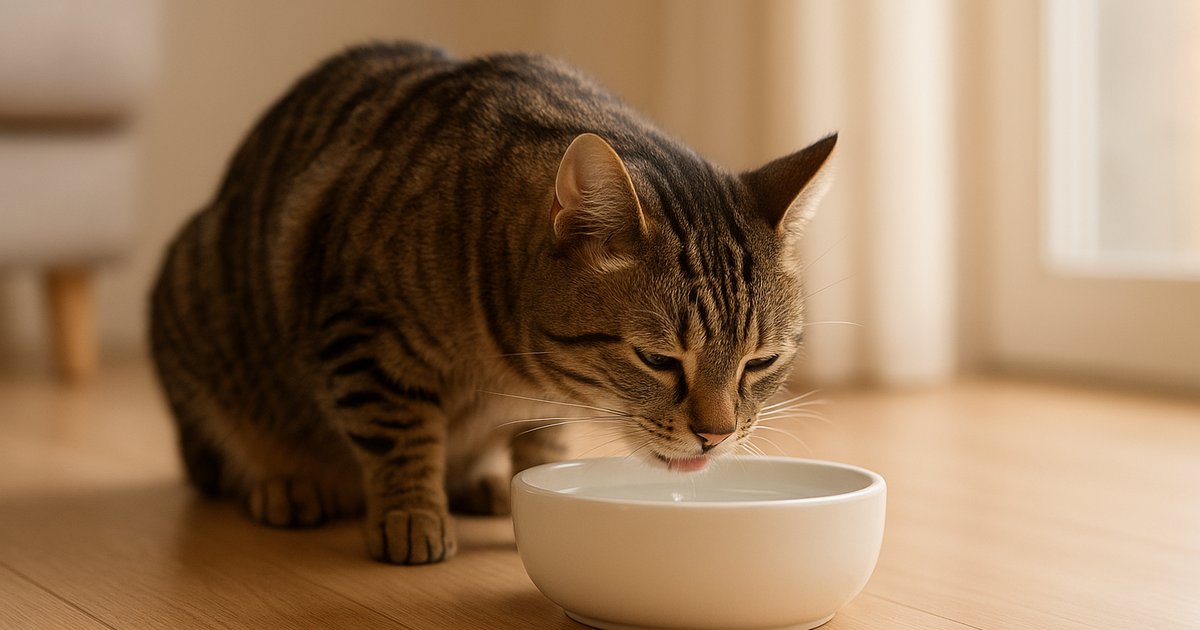
Cat Dental Water Additives Explained
What Are Cat Dental Water Additives?
A cat dental water additive is a liquid formula you add to your cat’s water bowl. It’s designed to support fresher breath and help reduce plaque buildup while your cat drinks normally — no brushing, no handling, no fight. That makes it the lowest-effort dental product there is: you measure the recommended amount into the water and let your cat do the rest.
The formula blends into the water your cat drinks throughout the day, so it gets a little oral-care support with every sip. Because there’s no handling involved, it’s the easiest way to keep something dental-related in the routine consistently — and for many cats, consistency is the hardest part of any dental plan.
Because additives work through something your cat already does every day — drinking — they fit naturally into even the busiest household routine. There’s no scheduling, no training, and no resistance to work around: if your cat drinks, the product is in play. They also scale to the whole household — one bowl, and every cat that drinks from it gets the same support.
Water additives are part of the at-home cat dental toolkit. If you’re new to cat dental care and want the full picture of what works and what doesn’t, start with our guide to cat dental care at home, then come back here for the details on additives specifically.
What Water Additives Can Do
Water additives are formulated to support fresher breath and help reduce plaque buildup, and they have some genuine practical strengths:
- Easy daily consistency. Your cat drinks on its own, so you’re not dependent on your cat tolerating handling. It’s about as reliable as a daily habit gets.
- Genuinely useful for cats that won’t tolerate handling. For a cat who won’t let you near its mouth, a water additive is one of the few dental products that can still be part of the routine.
- A reasonable starting point. For households new to dental care, it’s an approachable first step while you work on introducing other habits.
- Fresh-breath support. Fresher breath is a common goal for owners, and this is what additives are formulated to help with.
What all of this adds up to is consistency — and consistency is the ingredient most dental routines are missing. A product you actually use every day will do more for your cat’s mouth over time than a stronger tool you reach for twice a month, and an additive is the easiest product to actually use every day.
These are real benefits — but they’re mostly about convenience and consistency, not about physically removing plaque. Which brings us to the limits.
What Water Additives Can’t Do
This is the important part. A water additive is a supplement, not a replacement — and being clear about its limits is what makes it safe to use as one tool in the kit.
- It can’t physically remove plaque. Additives don’t scrub. Plaque builds up along the gumline, and removing it takes mechanical cleaning — brushing, or a dental kit with an applicator. A rinse has no scrubbing action, so it can’t do what bristles do.
- It’s not a treatment for tartar or dental disease. Established tartar and dental disease need professional veterinary care, typically a cleaning under anesthesia. No additive treats that.
- It’s not a replacement for brushing or veterinary care. The most accurate way to think about an additive: it supports a routine; it doesn’t replace the routine’s core.
There are also practical limits worth knowing. Your cat has to actually drink enough water for the additive to matter — if your cat barely drinks, the product barely does anything. Some cats notice a different taste and drink less, so it’s worth watching water intake when you start. And because it’s diluted in the bowl all day, it’s a background support rather than a concentrated treatment — another reason it’s a supplement, not a substitute.
This is also why it pays to read product claims carefully. An additive that promises dramatic plaque removal is overpromising — no rinse can scrub. The most reliable way to judge any dental product is by what it can realistically do: support a routine, supplement mechanical cleaning, and make an overall plan easier to keep up.
How to Use a Cat Water Additive Correctly
Using one is simple, but the details matter:
- Follow the label’s ratio. The product’s directions give the right amount per water volume — follow them rather than guessing.
- Use fresh water daily. Replace the water and re-add the additive each day. Stale water isn’t good for your cat, and the product is meant to be used fresh.
- Use a cat-formulated additive. Never a dog-formulated one. Cat products are designed for cats’ needs, and dog formulations aren’t.
- Give a picky drinker a separate bowl. If your cat is particular about water, a dedicated bowl with the additive lets the rest of the household drink normally.
- Watch intake. If your cat drinks noticeably less after you add it, stop and reconsider — water intake matters more than the additive.
The label’s directions always trump general advice: if the product says something different, follow the product.
If your cat is new to additives, it can help to start gently — some owners introduce it at part of the recommended ratio for the first few days so their cat gets used to the taste, then move up to the full amount. Watch how your cat reacts either way, and if drinking drops off, stop using it and talk to your vet.
Choosing the Right Water Additive for Your Cat
There’s no single “best” additive — the right choice depends on your cat’s situation. Here’s a needs-based way to think about it:
- Everyday baseline. If you want a straightforward daily additive for fresh-breath support, you can explore the Fresh Breath Oral Care Water Additive for Cats — a simple option for most households.
- Multi-cat household or refill value. If several cats share the water routine, a concentrate goes further: the TropiClean Fresh Breath Cat Dental Water Additive Concentrate gives more servings per bottle, so one bottle lasts longer.
- Cat with urinary health considerations. If you want dental support and urinary support from the same product, the Fresh Breath Dental Water Additive with Urinary Tract Support for Cats is formulated with urinary tract support in mind. It’s still a water additive, so it has the same strengths and the same limits.
Three honest notes. First, no additive replaces mechanical cleaning, whatever you choose. Second, if your cat shows signs of a urinary issue — straining to urinate, blood in or around the litter box, or unusually frequent trips — that’s a veterinary matter, and a water additive isn’t a treatment for it. Third, if you’re weighing options, you can compare the full range of cat dental care products in one place — the right pick is the one that fits your cat’s drinking habits, household, and specific needs.
When you compare options, focus on what fits your household rather than on marketing language: how many cats drink from the bowl, whether a single bottle or a concentrate suits your routine, and whether your cat has specific health considerations your vet has flagged. The best additive is the one your cat will actually drink, consistently, every day.
Where Water Additives Fit in Your Cat’s Dental Routine
The honest framing: additives support a routine; they don’t replace the mechanical action of brushing. If your cat tolerates it, brushing remains the at-home standard — you can follow our step-by-step guide to brushing your cat’s teeth to build that habit.
In practice, many households build a layered routine: brushing, or a dental kit with an applicator, a few times a week for mechanical cleaning; a water additive daily for background support; and an oral care spray for the days your cat won’t cooperate. Every layer is optional except one — some form of mechanical cleaning plus regular veterinary check-ups. For the bigger picture of what works and what doesn’t, our guide to cat dental care at home covers the full toolkit — and when you’re ready to stock the routine, you can browse the shop for cat dental care essentials.
If a pattern helps, here’s what a balanced week can look like: brush, or use a kit, on three days for mechanical cleaning; reach for a spray on the days your cat won’t cooperate; keep the water additive in the bowl daily; and do a quick visual check of teeth and gums once a week. Adjust to your cat — the exact shape matters less than showing up consistently.
For households where brushing isn’t possible at all, the honest ranking stays the same: some mechanical cleaning is better than none, and the alternatives — kits, sprays — are worth trying before you settle for an additive alone. The additive’s job is to make the routine easier to sustain, not to carry it alone.
When to See a Veterinarian
Book a veterinary visit if you notice persistent bad breath that doesn’t improve, red or bleeding gums, drooling, pawing at the mouth, changes in eating or chewing, visible tartar, or swelling around the face or mouth. Any of these warrant a check-up.
Established dental disease needs professional treatment — typically a cleaning under anesthesia — and a water additive isn’t treatment for that, any more than any other at-home product is. Our guide to cat dental care at home has a fuller list of when to see a vet and what professional care involves.
Even with a great routine, cats hide dental discomfort well, so routine veterinary exams matter as much as home care — your vet can spot problems you can’t see, and can tell you whether your cat’s teeth and gums look healthy between cleanings.
Frequently Asked Questions
Do cat dental water additives work?
Balanced answer: yes, for what they’re designed to do — support fresher breath and help reduce plaque buildup as a supplement, with the easiest daily consistency of any dental product. What they can’t do is physically remove plaque or treat dental disease; that takes mechanical cleaning and, where needed, veterinary care. Think of them as a helpful part of a routine, not a standalone fix. Used consistently over time, they’re a reasonable piece of an at-home prevention plan; used alone and expected to scrub plaque away, they’ll disappoint.
Can a water additive replace brushing?
No. Water additives don’t scrub, so they can’t remove plaque the way brushing does. They work best alongside brushing — see our step-by-step guide to brushing your cat’s teeth for the technique.
How often do I add it?
Follow the label. Most cat water additives are designed for daily use with fresh water — replace the water and re-add the product each day, at the ratio on the label.
Is it safe if my cat drinks a lot of water?
Cat-formulated additives are designed to be used in drinking water at the label’s ratio, and following the directions keeps the concentration where it’s intended to be. If you’re concerned about how much your cat drinks — or notice any change in drinking habits — check with your veterinarian.
Can I use a dog water additive for my cat?
No — use a cat-formulated additive. Dog formulations aren’t designed for cats, and cat products are the right choice for a cat’s needs. (The dog-formulated products we offer, such as our dog dental water additive for gut health, are intended for dogs.)
Related Articles
- How to Brush a Cat's Teeth
How to brush a cat's teeth step by step — the tools, the technique, how often, and what to do when your cat won't cooperate.
- Cat Dental Care at Home: What Works and What Doesn't
What actually works for cat dental care at home — and what doesn't. Honest look at brushing, kits, sprays, water additives, and when to see a vet.